






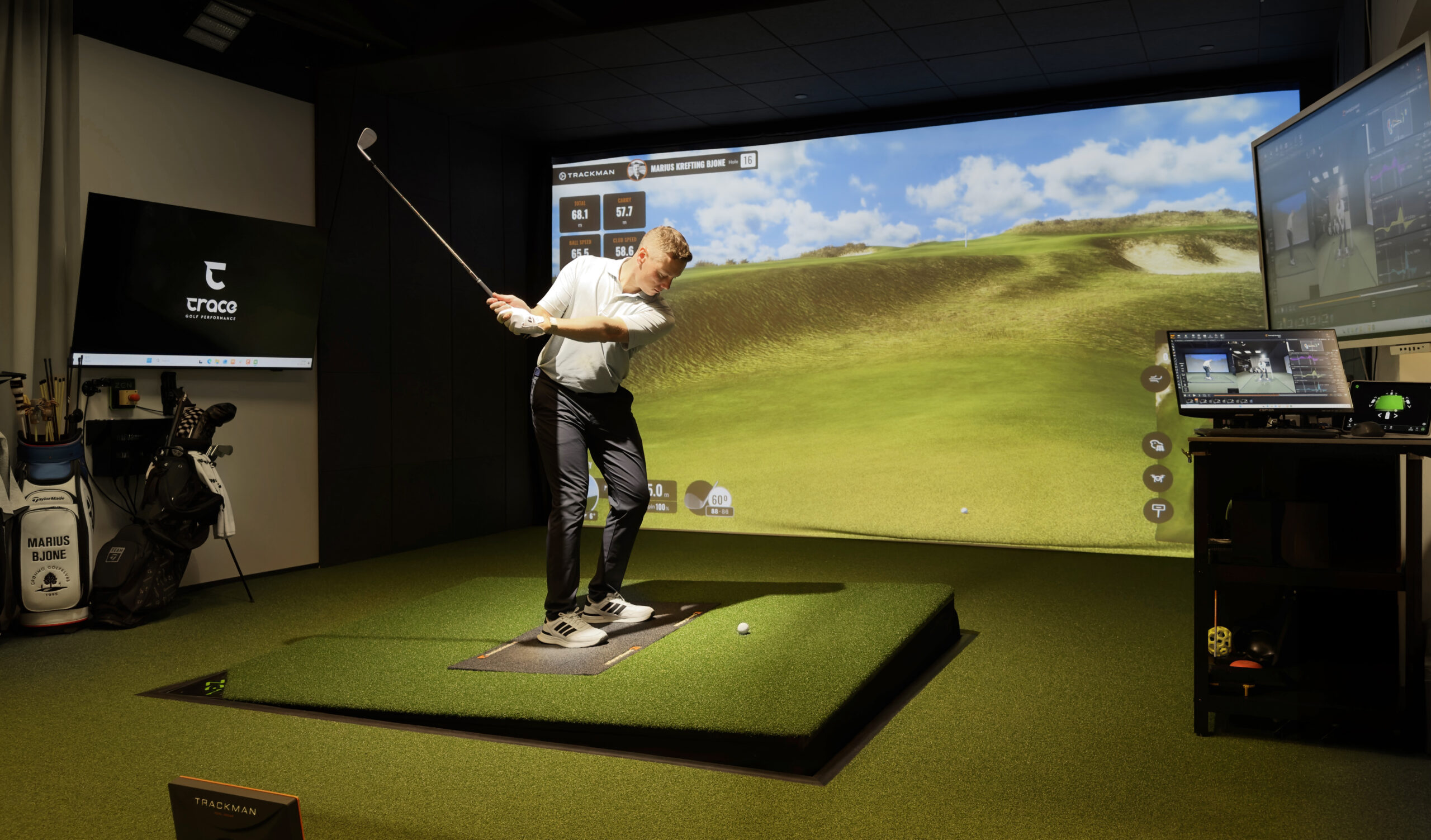

New facility combines coaching, biomechanics, equipment expertise and adjustable terrain to help golfers practise more as they play
Trace Golf Performance has installed a Zen Swing Stage at its new premises in Oslo, bringing Zen’s Active Terrain Technology into a coaching environment designed to understand how technique, biomechanics, equipment and playing conditions combine to influence golfer performance.
Located at Skullerud Park, the near-900-square-metre centre represents the culmination of an eight-year vision. The facility includes six simulator bays, a specialist golf gym, custom-fitting and club-building facilities, and dedicated areas for coaching and player analysis.
Founded by PGA professional Marius Bjone and experienced club fitter and builder Tom Horley, Trace Golf brings together their respective expertise in coaching, player development and equipment performance.
Norway already has a well-established indoor golf market, but Trace Golf has been designed to offer something different from the familiar flat-mat simulator model. By combining coaching, biomechanics, equipment expertise and linked performance technology within one dedicated space, the facility is aimed at serious golfers who want to use the indoor season to actively improve their game rather than simply replicate a round of golf indoors.
Its coaching setup combines the Zen Swing Stage with Swing Catalyst Dual Motion Plate, high-speed camera and launch-monitor technology, giving coaches different ways to examine how golfers move, interact with the ground and produce shots.
The Swing Stage adds one variable often removed when golf moves indoors: changing terrain.
Zen’s Active Terrain Technology enables Trace Golf to create adjustable uphill, downhill and sidehill lies, allowing coaches to observe how players adapt when the ground beneath them changes.
Marius Bjone said:
“We built Trace to close the gap between practice and play. A golfer’s movement, strike and decision can change when the lie changes, so a performance environment should allow us to explore those conditions rather than treat the flat mat as the whole game.”
Carl Hansen, Head of Sales and International Partnerships at Swing Catalyst, explained:
“Seeing domain experts like Marius and Tom join forces to build a facility like this is just fantastic. We are very appreciative of being among their selected technologies, we know they only value the very best. Having our dual motion plates embedded in the swing stage gives Marius a real edge, he can quantify how slopes affect the GRF, and his students can learn faster by employing ‘learning by sensation’. We wish them the very best and we look forward to working closely with them in the future.”
For Bjone, that forms part of a wider coaching philosophy based on expanding the tools available to both coach and golfer. Linking changing terrain technology with Swing Catalyst Dual Motion Plate, camera and launch-monitor feedback, Trace Golf can create a more interactive coaching environment in which players experience different movement challenges and use the resulting data to better understand how they respond.
Bjone added:
“Technology is valuable when it expands the coach’s toolbox and helps the player build one of their own. Sometimes the most effective communication is not another instruction; it is changing the environment and allowing the golfer to experience the problem and discover a better response.”
The same approach supports Trace Golf’s ambition to make indoor practice more representative of the outdoor game.
Norway’s long winter can keep golfers off the course for up to six months of the year, making indoor golf an essential part of the playing and development cycle. Trace Golf has been created to ensure that time indoors is used productively, with a performance environment designed to keep practice closely aligned with the movement, decision-making and playing conditions golfers will face when they return to the course.
The Swing Stage has been integrated naturally into that environment, helping adjustable terrain become part of everyday practice rather than a standalone feature.
Zen Golf’s Head of Education, Will Stubbs, commented:
“Trace Golf is helping move indoor coaching forward by making active terrain part of its coaching toolkit. The Zen Swing Stage gives its coaches another way to build sessions around specific areas of a player’s game, then personalise the challenge using Trace’s wider coaching and performance technology. It creates a more focused practice environment where the conditions can be adapted around the individual golfer.”
The same performance-led philosophy also shapes the community Trace Golf is building around the facility.
Its membership model is designed around golfers committed to practising and improving, with the ambition of bringing together players from across Oslo and the surrounding area who can continue learning and developing throughout the year.
Junior and professional player groups, manufacturer partnerships and further coach education are also planned as that community develops.
With its performance-led environment and community centred on improvement, Trace Golf aims to help golfers develop throughout the year and return to the course better prepared when the outdoor season begins again.