
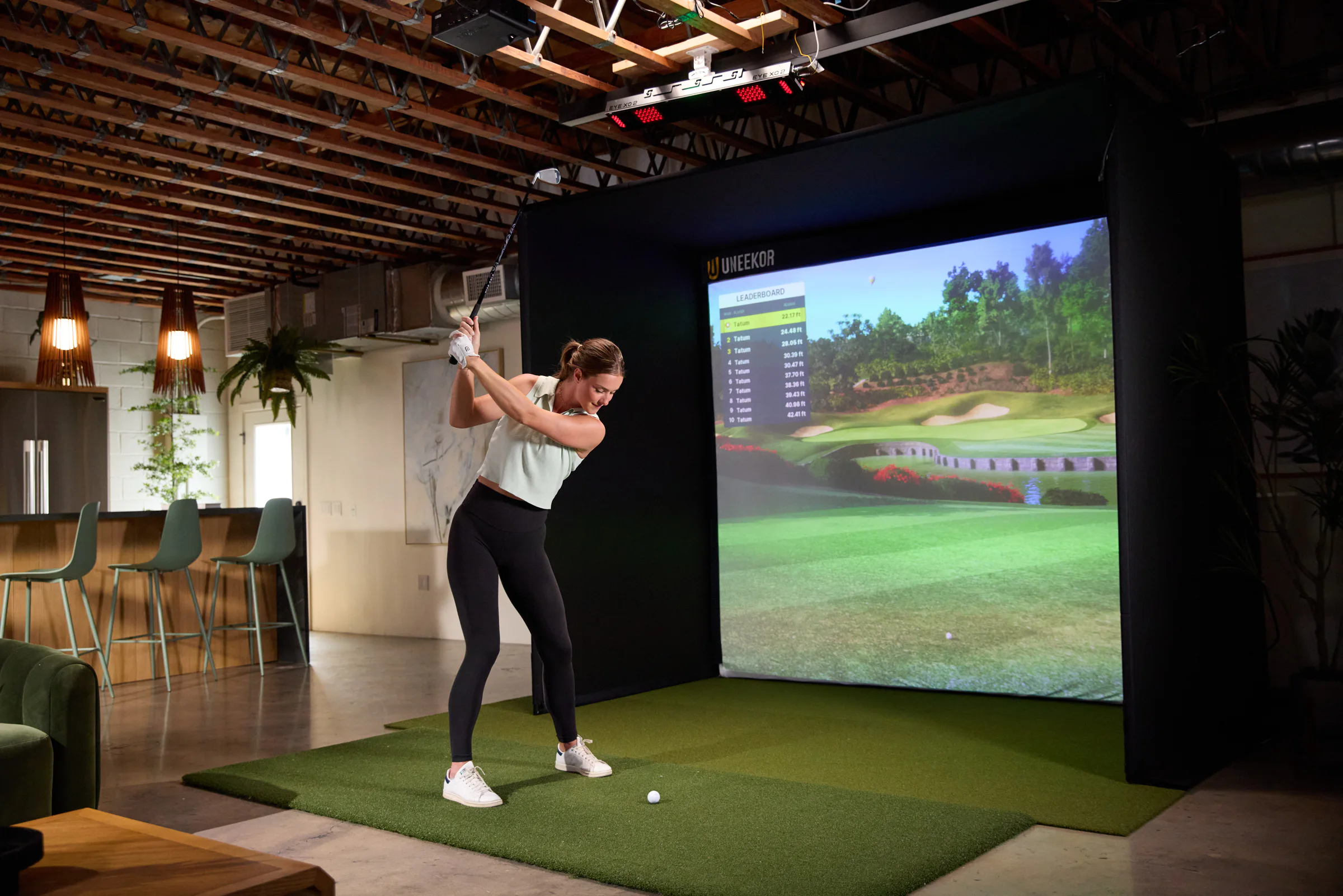
Tarick Walton is Head of Product Management at Uneekor, where he supports the development of the brand’s AI coaching technology. An MIT graduate with a background spanning medtech, manufacturing, and software platforms, he has spent his career building systems that translate complex data into insight people can actually use.
Ever since I was a kid, I grew up with a passion for solving problems and figuring out what enabled complex systems to function efficiently. When I started a career in medtech, that meant constructing a device that could produce precise and comprehensive data in real-time, so that doctors were empowered to make accurate treatment decisions. In manufacturing, it meant asking why a production line could generate thousands of data points per hour, yet still miss the defect that could cause service failure or damage to a company’s brand. The answer, almost every time, was the same. The data existed, but the understanding was missing.
When I joined Uneekor, I came in as an emerging golfer and an engineer looking at a sport that had built an extraordinary hardware measurement infrastructure but had plateaued in the realm of AI and data analytics. The launch monitor had solved the capture problem. What I found at Uneekor was a team that had already started asking the harder question: not just how to capture what happens in a swing, but how to make that information mean something to the golfer standing there with a club in their hand. To me, that was the more interesting problem and it felt familiar to my background.
Golf has never had more data. Between launch monitors, swing cameras, pressure plates, wearable devices, and more, the modern golfer has a spreadsheet’s worth of numbers from a single session, including ball speed, spin rate, launch angle, smash factor, face angle, and club path. The metrics are precise, and the technology has opened up the game in ways that weren’t possible a decade ago. But collecting data and understanding it are two different things, and for most golfers that gap is still wide open.
AI-driven sports technology is growing at 21.6% annually and is projected to reach $49.9 billion by 2033. Golf sits squarely in the middle of that surge, yet most of the solutions golfers use today were built around data capture rather than data comprehension. There’s a meaningful difference between the two.
I’ve spent a lot of time watching players interact with data, and for a long time the pattern was consistent. A golfer would hit a shot, look at the numbers, nod, and hit another one. The data existed, but the insight didn’t. Without insight, data is just another number.
For too long, the industry built tools that answered the question “what happened?” without ever seriously asking “so what does this mean?” or “what can I do differently?” Some training tools produced outputs that were technically impressive but difficult to interpret without a coach standing next to you. Others were accurate on ball data but disconnected from any meaningful swing analysis. The result was a fragmented experience that put the burden of translation entirely on the golfer or instructor.
The best coaches understand they can’t just hand a student a printout of data points and walk away. They look at the numbers, connect them to what they observed in the swing, and tell the player one specific thing to work on. That translation, from measurement to meaning, is where real improvement lives, and it’s what technology historically failed to replicate until now.
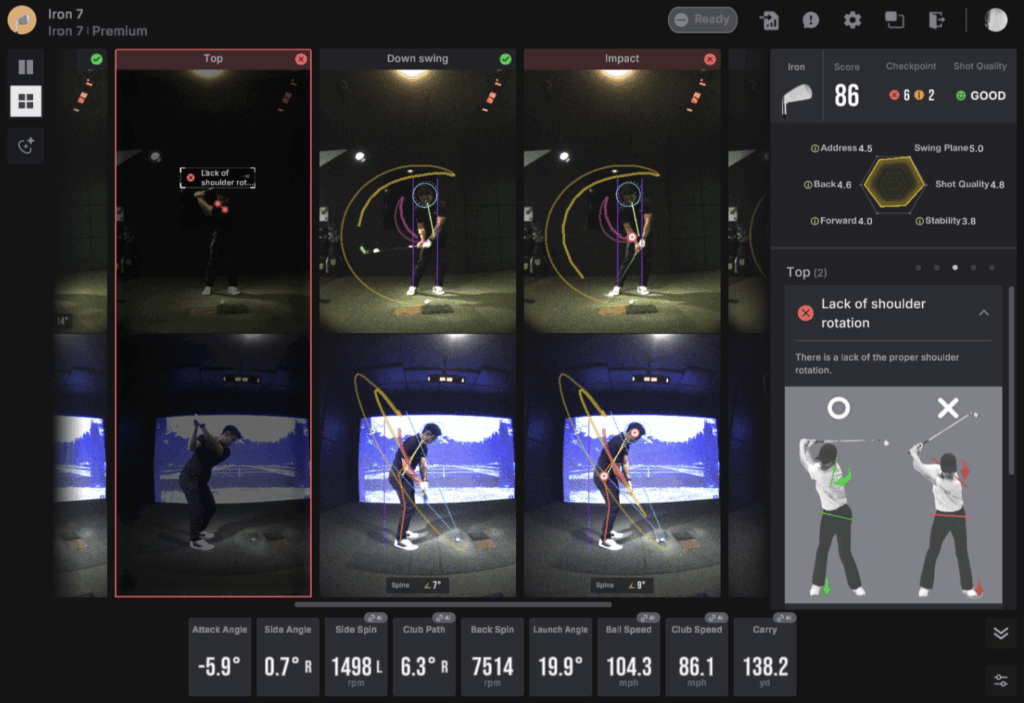
A well-designed AI system can now evaluate more than 60 swing checkpoints for each club type in under five seconds and deliver a personalized score that gives the golfer a clear, consistent baseline to work from. That’s the difference between feedback you can act on during a session and feedback you process after you’ve already driven home.
The result in practice is striking. Coaches have told me that golfers who previously needed 100 swings to identify a pattern can now get meaningful, actionable insight in 20. That’s not just more efficient practice. It’s a fundamentally different relationship with the data. When a golfer can watch their shoulder rotation or hip mobility shift on screen and connect that movement directly to a change in their swing score, something clicks that verbal instruction alone rarely delivers.
What I keep hearing from the coaches using this technology points to something consistent. One instructor I work with told me that what he values most is the ability to show a student how fixing something in their setup or body movement, something completely unrelated to club path, shows up immediately in their path data. The coach will address a student’s setup or body movement, and then show them on screen how that single change rippled through to their data.
Another coach, who runs a performance facility built around a full physical, mental, and swing assessment process, told me that AI Trainer sits at the center of all three. The data gives students a baseline they can return to and a way to watch their progress accumulate over time. When a student can see their shoulder rotation improve on screen and connect that directly to their swing score changing, the feedback loop becomes self-sustaining. They stop needing to be convinced because data does it for them which is what the translation from measurement to meaning looks like in practice.
There’s a broader implication here that most of the industry hasn’t fully adopted. Golf improvement has always been gatekept by access to good coaching, quality facilities, and enough practice time. AI can break down that barrier, but only if it’s built around self-learning comprehension, not just data capture. A system that’s accurate on swing analysis but presents that analysis in a way that requires expert interpretation hasn’t actually solved the access problem. The next frontier isn’t more data. It’s more intelligent data. Systems that explain the why behind the numbers and tell golfers what to do about it through conversational interfaces, voice-activated feedback, and AI that can answer questions in plain language mid-session are in development right now, and they represent the biggest shift in what practice can look like for a golfer at any level.
We’re at a turning point in golf technology. The measurement era is essentially complete, but what comes next is the era of understanding, and at Uneekor, we’re already there. When golfers can clearly see their tendencies, trust their distances, and rehearse real on-course scenarios, they step onto the course with something data alone has never been able to provide: genuine confidence. Preparation builds trust. Repetition builds execution. The gap between the two is exactly where AI is built to operate.